 TheDressedMan
Long Legs Short Torso Men: Styling for Better Proportions
Practical styling guide for long legs short torso men: jacket length, rise, patterns, and visual tricks to balance proportions confidently.
You buy trousers that fit your waist, yet the waistband climbs higher than expected and the legs seem to start under your ribs. Then you try on a jacket in the same labeled size, and the choice is just as frustrating. One hem stops too high, while the next size gives you extra body length but leaves the chest and shoulders swimming. If you're one of the many long legs short torso men, the problem usually isn't your height. It's the relationship between your measurements and the pattern used to cut the garment.
Why Proportions Matter More Than Height
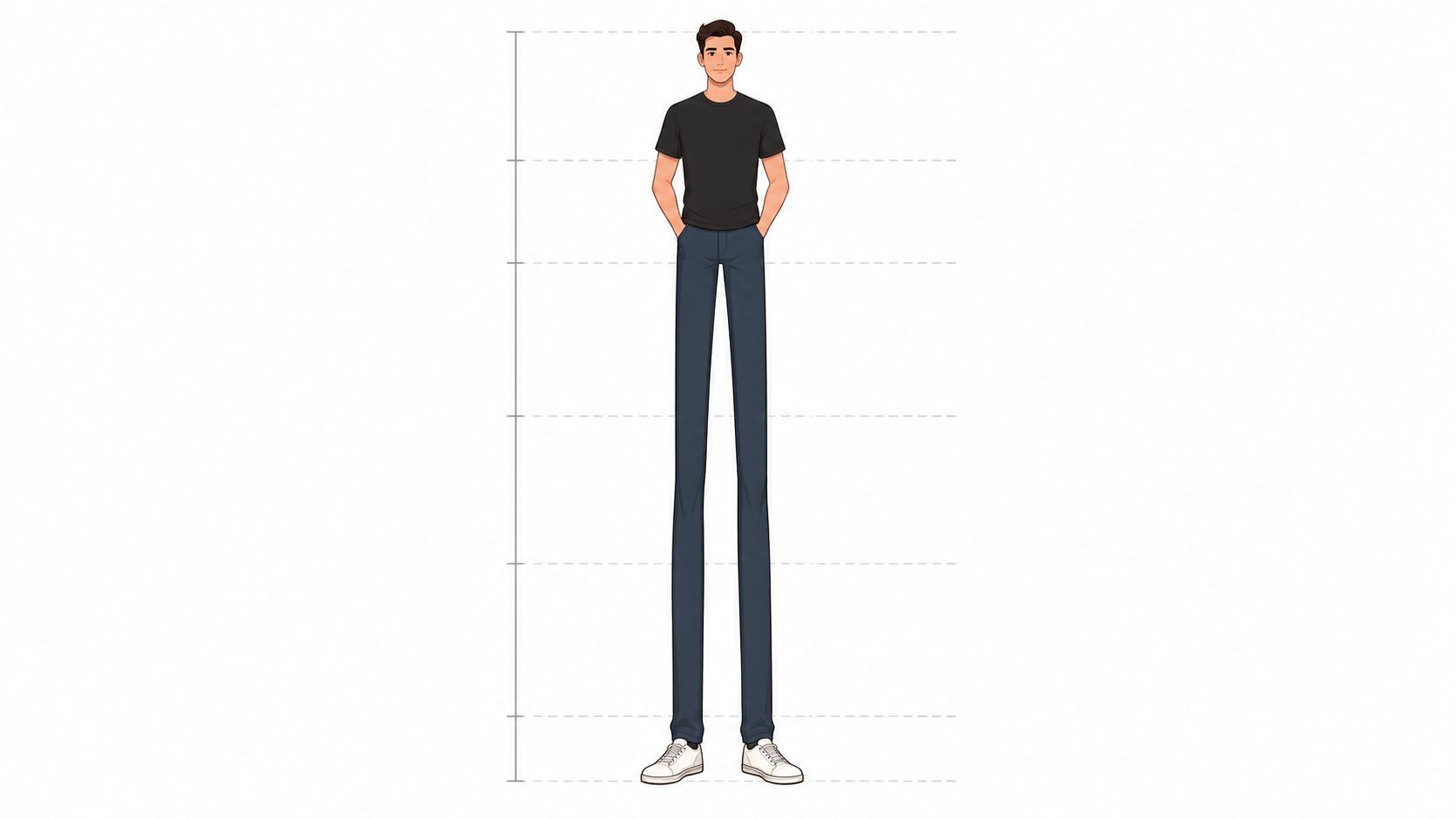
Height alone gives poor guidance when a man's legs and torso differ from standard clothing proportions. A tall man may have a balanced body, while a man of average height may have a short torso and unusually long legs. Brands usually label garments by height and waist, yet those labels cannot show where your height sits. Two men can share a trouser waist and inseam but require different rises, jacket lengths, and shirt bodies.
The fitting-room test is clear. Your trousers have the correct inseam, but the rise pulls upward and the waistband sits too close to your natural waist. You size up in a jacket for more torso coverage, then find that the shoulders extend past your frame and the chest hangs loose. The garments may be well made. Their commercial patterns do not match your vertical proportions.
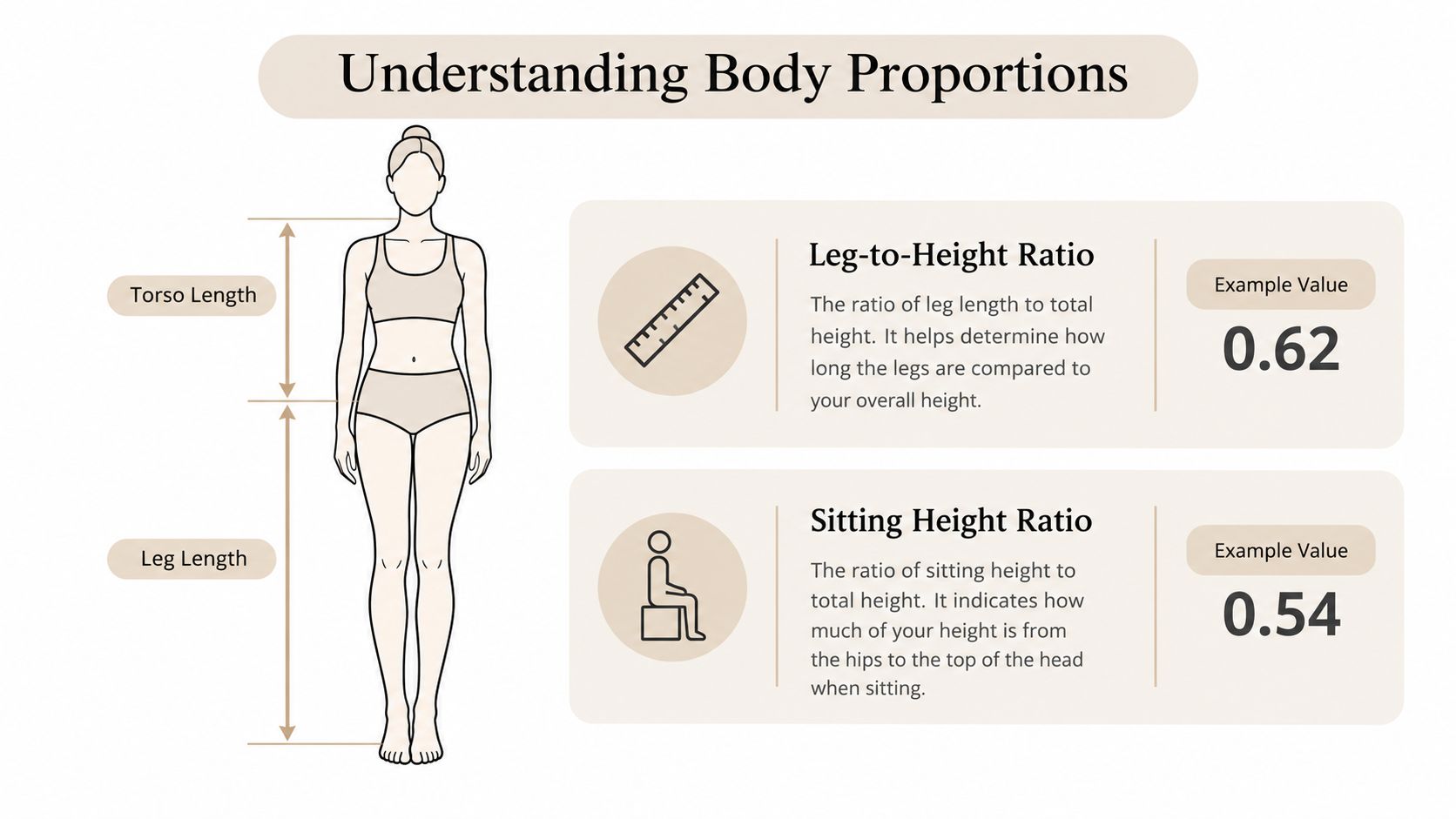
Start with the leg-to-height ratio, calculated by dividing leg length by standing height. A peer-reviewed analysis of male measurements from the 1988 U.S. Army Anthropometry Survey found an average ratio just under half of total height, with meaningful variation around that average (peer-reviewed analysis of male leg-to-height ratios). A higher ratio indicates proportionally longer legs and a shorter upper body. Use this measure to identify the pattern problem before choosing a size.
Separate visual proportion from garment fit
A proportion ratio cannot tell you whether a trouser seat lies cleanly or a jacket collar sits correctly. Body diagnosis and fit diagnosis are separate jobs. Establish your body proportions first, then assess each garment dimension on its own.
Check four points:
- Does the trouser rise sit where you need it?
- Does the jacket cover enough of the seat without adding excess chest width?
- Does the shirt stay secure without creating a bulky tuck?
- Do the sleeves and trouser legs finish at the correct points?
A broad body category can provide general context through this body-type guide, but it cannot replace measurements. A short torso is a proportion to accommodate, not a defect to conceal. Long legs are useful when the garment pattern supports them. Choose clothing by vertical relationships, then refine the fit at the waist, seat, chest, shoulders, and hems.
Understanding the Measurements That Define Your Fit
A mirror can make the same body look different from one outfit to the next. Posture, camera angle, shirt length, and waistband position distort visual judgment. Measure first, then decide whether you have a proportion issue, a garment-fit issue, or both.
The most useful measure here is the sitting-height ratio, or SHR. Divide sitting height by standing height and multiply by 100. Sitting height includes the head, neck, and trunk, so a lower SHR means the upper body takes up a smaller share of total height and the legs appear relatively longer. This ratio helps identify a pattern problem before you alter your wardrobe, as shown in this research on sitting-height ratio and body proportions.
Take the measurements consistently
Use a flat floor, a wall, a firm chair, and a soft tape measure. Wear light clothing and remove your shoes. Keep your posture natural, because forcing your stance changes the result.
- Standing height: Stand upright with your heels against the wall. Measure from the floor to the top of your head.
- Sitting height: Sit squarely on the chair with your back against the wall. Measure from the seat surface to the top of your head.
- Practical leg estimate: Subtract sitting height from standing height. Record inseam separately for trouser selection.
- Natural waist: Measure around the point where your torso bends naturally. Keep the tape level and comfortable.
- Rise: Measure from the crotch point to the waistband position you plan to wear. For trousers, compare this result with the brand's front and back rise measurements when available.
Use SHR to diagnose proportions, not to label your body. The ratio does not determine whether a trouser seat lies cleanly or a jacket collar sits correctly. Body diagnosis and fit diagnosis are separate jobs.
Your result becomes useful when matched with repeated clothing problems. A relatively low SHR combined with trousers that sit too high gives you a clear reason to test a lower or mid-rise pattern. A jacket that repeatedly ends above the seat points toward insufficient body length, not automatically a larger size.
Check each garment dimension independently: waistband, seat, rise, jacket length, chest, shoulders, sleeves, and hems. Follow this men's clothing fit guide for basic fit checks, then rely on your measurements rather than a generic height label.
How to Measure for Trousers and Jackets
Take measurements in a fixed order and record them. A tailor needs more than your height, and you should expect the same standard from a size chart.
A published anthropometric design protocol recommends six stages: identify the dimensions controlling fit, define the target population, choose the share of users to accommodate, obtain reference statistics, calculate dimensions, and adjust for clothing or equipment (published anthropometric design protocol). For personal shopping, translate that framework into a simpler routine.
Build your measurement sheet
Write down these dimensions:
- Standing height: This describes total stature, but it doesn't determine torso or leg proportion.
- Sitting height: Use it with standing height to calculate SHR.
- Waist and hip: These control the waistband, seat, and overall trouser comfort.
- Inseam: Measure from the crotch to the intended trouser hem. Keep the tape along the inside leg.
- Rise: Record the rise of trousers that fit well, then compare it with new garments.
- Chest: Measure around the fullest part of the chest while breathing normally.
- Shoulder and sleeve: Use these for jackets and shirts, especially when body length is your main concern.
Trousers should be selected by waist, hip, rise, and inseam independently. Don't buy a larger waist because the rise is too short. That usually produces a loose waistband and extra fabric through the seat without solving the vertical problem.
Jackets require a different priority order. Start with the shoulders and chest, then check sleeve and body length. You can alter sleeves and sometimes the hem. Correcting a badly oversized shoulder is far less practical, so don't size up only to gain torso coverage.
Compare bodies with garment charts
A size label gives you a starting point, not a verdict. Lay your measurements beside the brand's chart and look for the dimension that fails first. If the waist and hip align but the rise is too short, reject that trouser pattern. If the shoulder and chest align but the jacket hem is short, look for a longer cut or plan a length adjustment.
Fit also changes with posture, body shape, and the relationship between your hips and waist. Equal waist measurements don't guarantee equal fit. One man may need more seat room, another more front rise, and another a different waistband position because of posture.
Buy the jacket for the shoulders and chest. Buy the trousers for the waist, rise, and inseam. Alter the dimensions that can be altered.
Choosing Rise, Jacket Length, and Patterns
Your most powerful styling tools are the waistband position, the jacket hem, and the way the outfit creates visual breaks. Use them deliberately. Don't attempt to force your body into a trend-led silhouette.
For most men with long legs and a short torso, begin with mid-rise or lower-rise trousers that stay secure without reaching aggressively toward the natural waist. The point isn't to wear trousers so low that the seat collapses or the waistband slips. It's to stop the waistband from moving the apparent waist even higher.
A moderate leg opening also helps. Very narrow trousers create a long, uninterrupted vertical line, while a controlled opening gives the lower half enough visual weight to feel grounded. A straight or gently tapered leg is usually easier to balance than an aggressively skinny cut.
Use the jacket to add upper-body continuity
A cropped jacket exposes more of the trouser rise and makes the legs appear to begin higher. Choose a jacket hem that covers the seat and creates a continuous upper-body block. The jacket shouldn't overwhelm you, but it should provide enough length to counter the visual dominance of the legs.
Shirts deserve the same discipline. A short untucked shirt can create a sharp break high on the body. A slightly longer shirt, a relaxed half-tuck, or a jacket worn over the shirt can soften that break. Avoid using excessive volume as a substitute for length. Oversized clothing often makes the torso look wider, not longer.
Compare the main choices
| Garment decision | Usually helps | Usually works against you |
|---|---|---|
| Trouser rise | Mid or lower rise with stable support | Very high rise that reaches toward the natural waist |
| Trouser shape | Moderate opening, straight or gentle taper | Extremely narrow legs with strong vertical emphasis |
| Jacket length | Hem that covers the seat and builds an upper-body block | Aggressively cropped hem |
| Shirt length | Enough length to avoid a high, hard break | Short untucked shirt ending near the waist |
| Color placement | Controlled contrast between shirt and trousers | A sharp horizontal contrast at the waistband |
| Trouser details | Subtle pattern and restrained lines | Strong vertical stripes or pronounced vertical creases |
This doesn't mean you need a dull wardrobe. It means your contrast should have a job. A darker trouser with a related-tone shirt can reduce the sense that the legs are detached from the torso. A jacket in a contrasting but substantial color can create a clear upper-body shape without cutting the figure at the wrong point.
For more outfit combinations based on practical proportion control, use the men's styling resources, but keep the same test in mind: where does the outfit place the waist, and where does it end the upper-body block?
The Three-Stage Fitting Checklist
For long legs and a short torso, check the jacket hem before judging the waistband. This prevents buying a larger size for extra length and losing control of the shoulders. Use the same order whenever you try on a jacket, shirt, or pair of trousers.
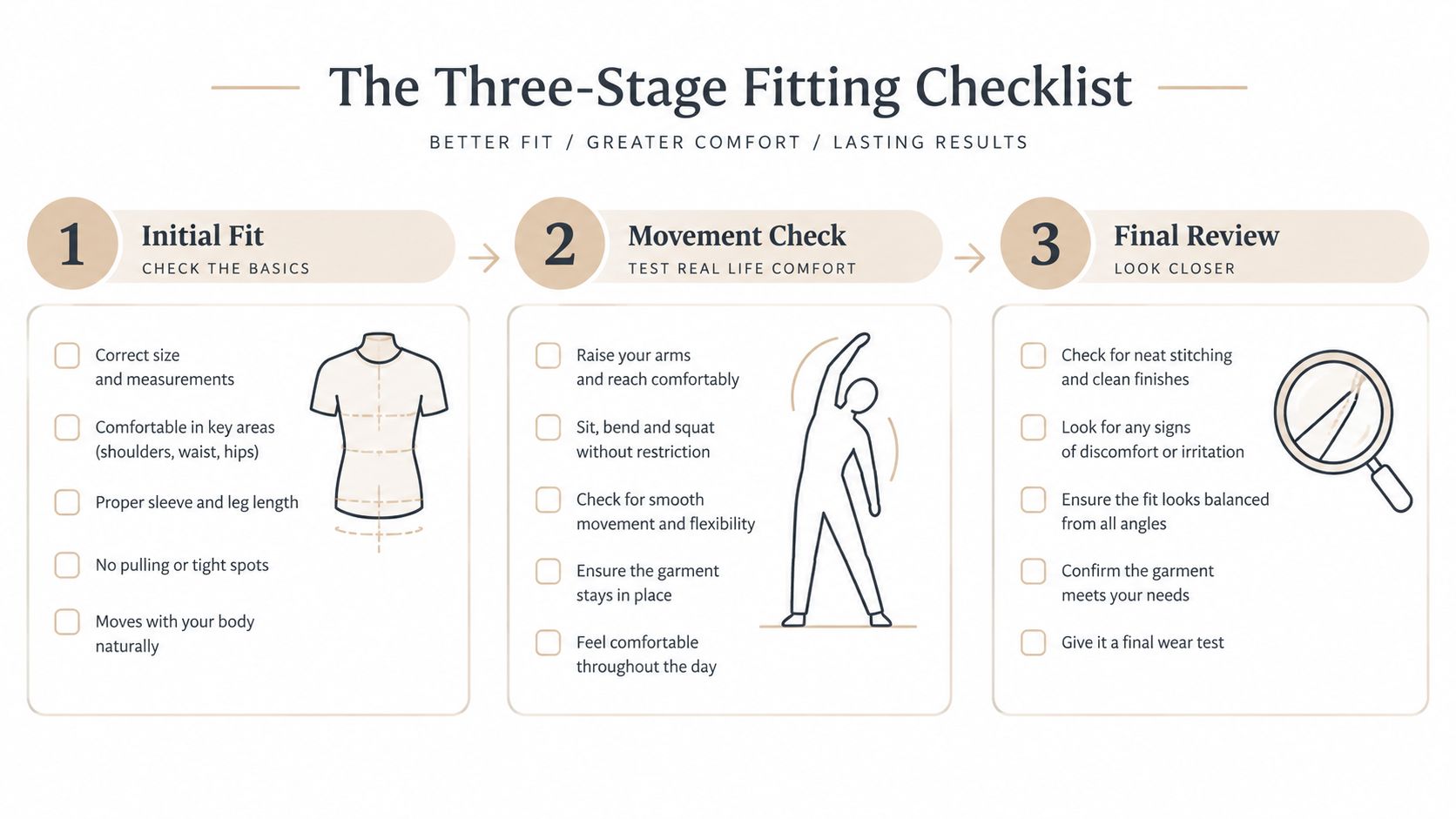
Stage one checks the structure
Start with the shoulder seams and collar. The shoulder seam should finish at the edge of your shoulder, not slide down the arm. The collar should sit close to the neck without pulling away.
Reject the garment if either area fails. A tailor can shorten sleeves and may alter body length, but shoulder correction is limited and costly. Choose the better size or pattern first.
Stage two checks the upper-body block
Stand naturally and inspect the jacket or shirt hem from the front and side. A jacket should align with the seat to create a continuous upper-body block without swallowing your frame. A shirt needs enough length for its intended use, especially when tucked, without forming a heavy bundle at the waist.
Check how the hem relates to the trouser rise. If it exposes too much rise, the torso appears shorter. If it falls excessively low, the upper body can look broad and compressed. Choose the shortest length that provides coverage and continuity, rather than adding fabric for its own sake.
Stage three checks movement
Test trousers standing, sitting, bending slightly, and walking. Check the rise, break, waistband stability, and seat. A shifting waistband, pulling crotch, or diagonal drag lines across the rear points to a pattern problem, not a styling issue.
Garment ease also changes perceived body scale. Digital-fitting research found that perceived size varies with ease among slender men within specified body-ratio ranges, while excessive looseness or tightness can distort visual proportions (research on garment ease and perceived body scale). Keep the fit controlled. Oversized layers will not lengthen a compact torso.
A clean waistband and seat matter more than a label that claims to suit your height.
For a budget-conscious wardrobe, spend first on garments with the correct shoulders, chest, waist, and rise. Use alterations for sleeves and hems. If a garment fails two stages before movement, leave it behind.
Check the sequence with this three-stage clothing fitting checklist guide illustrating the steps to ensure garments fit comfortably and correctly.
Rethinking Long Legs as an Advantage
Long legs aren't a flaw that requires camouflage. They become difficult only when trousers, shirts, and jackets place their visual breaks in the wrong locations.
Research on male leg-to-body ratios found a mean ratio of 0.491 with a standard deviation of 0.015, while also showing that judgments about an ideal ratio depend on how the body is represented (research on judgments of male leg-to-body ratios). That matters because it rejects the idea that one universal ratio dictates what looks good. Fit and context matter more than a rigid target.
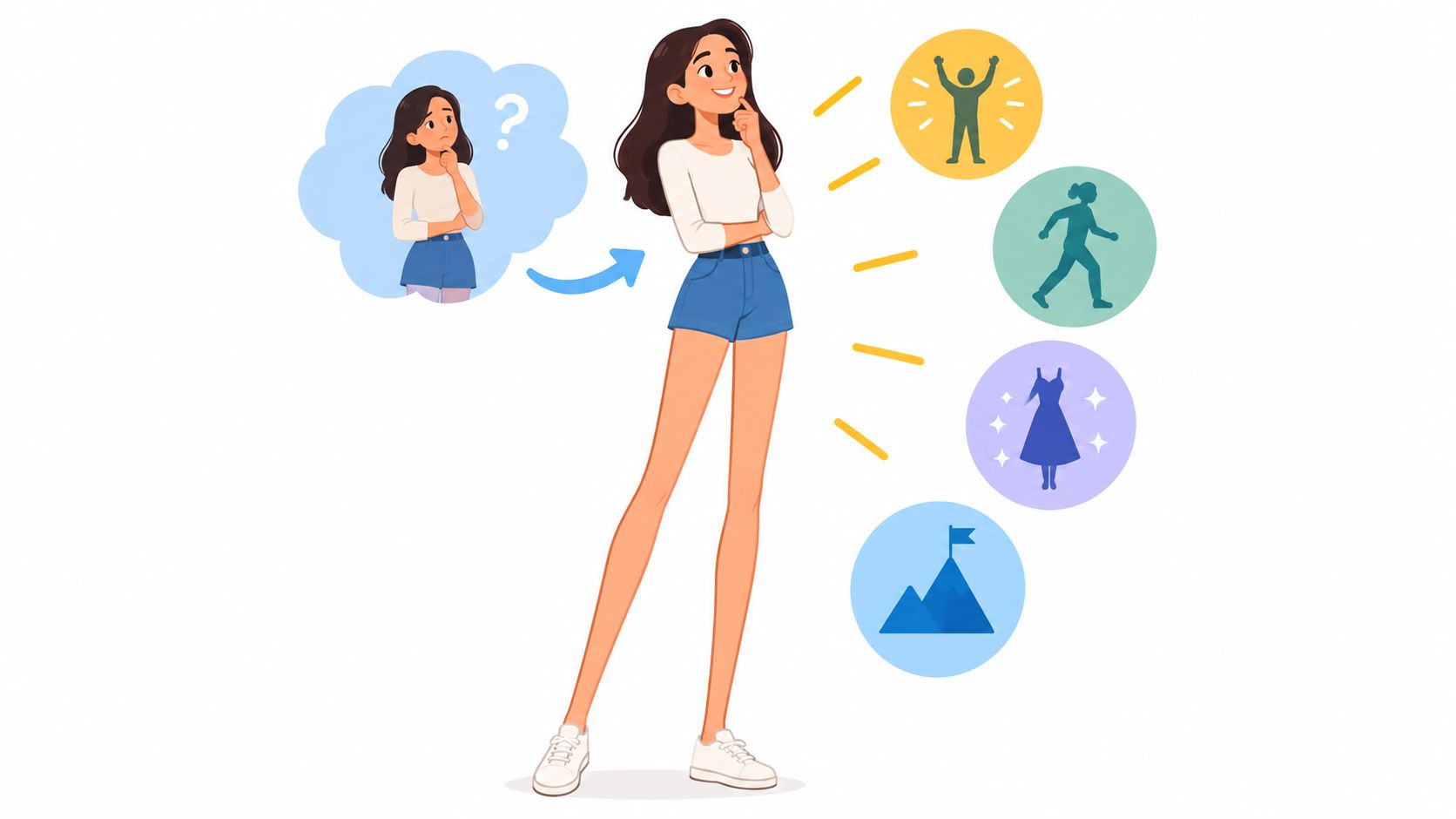
Your shopping workflow should stay simple:
- Buy trousers for the waist, hip, rise, and inseam.
- Buy jackets for the shoulders and chest.
- Choose shirts for the collar, shoulders, sleeve, and body length.
- Alter sleeves and hems when the underlying pattern is sound.
- Reject garments that need excessive volume to provide the right length.
The core challenge for long legs short torso men is not having an unusual body. It is finding garments whose vertical dimensions are independently correct. Once the waistband, jacket hem, and shirt length work together, your proportions read as intentional, clean, and balanced.
A well-fitted wardrobe doesn't erase your shape. It gives your shape a coherent frame.
The Dressed Man offers practical fit guides, outfit formulas, and checklists for men who want clear decisions without chasing trends. Visit The Dressed Man to apply this measurement-first approach to trousers, jackets, shirts, and the rest of your wardrobe.
Keep reading
Styling
What Colors Go Good with Khaki Pants
Discover what colors go good with khaki pants. Practical outfit formulas for navy, olive, white, and brown that actually look sharp every day.
8 min read
Situations
What Should Men Wear on a First Date: A No-Guess Guide
Exact first-date outfits for men by venue and weather, plus a 30-second fit check and what to skip. No guesswork, no overdressing.
6 min read
Styling
How Should Men's Clothes Fit? The Complete Fit Guide
The exact fit checklist for shirts, t-shirts, pants and jackets — no tailor needed. Know in 60 seconds if something fits right.
10 min read